


Streets of Seoul #3: A night where the club became a system

June 26, 2026 was the date Streets of Seoul #3 took over Chez Lulu, but the event did not make its presence known through spectacle out on the streets. Rather, the event made itself known through pieces of itself, through the gradual squeezing of people at the entrance, through the subtle bass leaking into the room through the walls, through the conversations that were slowly reduced to nothing but nods and the walking through the door. Paris was an ordinary place until it became something else entirely in an instant of time.

Inside, the architecture of the space announced its presence right away not as visual ornamentation, but as a functional pressurized system. The multi-leveled design created visual vantage points that never quite separated the space from itself, so that every level remained part of the continuous circulation of sound and activity. Lighting in red and black color schemes stripped the space of its sense of depth, reducing human faces and movements to silhouette and rhythm. Even at the beginning of the night, the crowd was an unusual mix of K-events regulars, local Parisian hip-hop fans, and new visitors whose body language betrayed their careful scans of the space to see if they belonged there.
DJ RANAVY started the party around 23:00-24:00 by throwing something which didn’t follow the natural tendency to immediately build up peaks. Rather, the set was a form of calibration – an experiment with the amount of weight the club could bear without crashing into premature energy. The music itself shifted from the sounds of Korean hip hop, international rap tracks, and French stuff but avoided any statement in its transitions. It wasn’t about the aggression; rather, the restraint became the key factor as the crowd was constantly adapting by slowly moving toward the center of the space without any external force doing so. Near the left side rail, a couple had a fight about the track ID but ultimately decided to surrender to the beat and move along with the music.
As DJ FLO came into play, the atmosphere in the room changed from something more focused on volume to something based on intent. The beats became tighter, the rhythm was a bit slower, and the bass was beginning to feel more in the chest than in the ears. There were more people packed onto the main floor of the club, and the sense of disunity that had been present before seemed to dissolve into a more cohesive energy of movement. There was more room left to move, but not as much room left to not move. Even the staff at the venue started moving differently.

Perhaps the clearest turning point occurred when DJ BOJVCK played, who, as opposed to the others, compressed the night, but did not intensify it. The general energy, which was distributed relatively evenly across the room, gathered more into itself and brought people from the edges into the center of the dance floor. Sound designing became more aggressive; transitions were based on impact and not on glide. Once, during one transition, there occurred a slight hesitation in the technical side of things; it caused only a half-second of silence, which was instantly covered up by cheers; this reaction spoke more about how ready people were to compensate for any lapse than about the problem itself.
The appearance of BLASÉ during the showcase between 01:30 to 02:00 didn’t disrupt this movement; it repositioned it. Introduced as a preview of album material, this set felt heavier than the others that were happening at that time because it was less loud and therefore more vulnerable. There was instantly a change in the level of attention concentration; phones came down quicker and conversations just disappeared without prior negotiations. The show itself was executed without excesses and there were intervals between tracks that created a sense of choice.
The thing that made the experience unique was the disappearance of distance between the stage and the floor. BLASÉ was not confined to a performance point, rather coming among the people, now and then, standing next to people who were there for a night out at the club and not for a live album presentation. This was not the kind of theatre experience but the dissipation of structure and hierarchy. The people who gathered in the middle seemed to respond not with yelling but with being still for some time, which was quite unusual in a place where there is so much movement. There was a new track played that evening and it seemed to be different from other tracks in the sense that the people responded not with increased volume but with concentration.
As the showcase concluded, there was no sudden drop in energy, which would usually indicate a reset point in most club environments. Rather, DJ GONWOO came on with so much flow that it was hard to notice the change if not actively being aware of it. There was no relief of pressure from the audience, rather, it was redirected. The audience was still fully immersed, although the emotional peak turned into groove mode. Movement became less erratic and more constant, since dancers were not responding to drops anymore but sustaining momentum for extended periods of time.
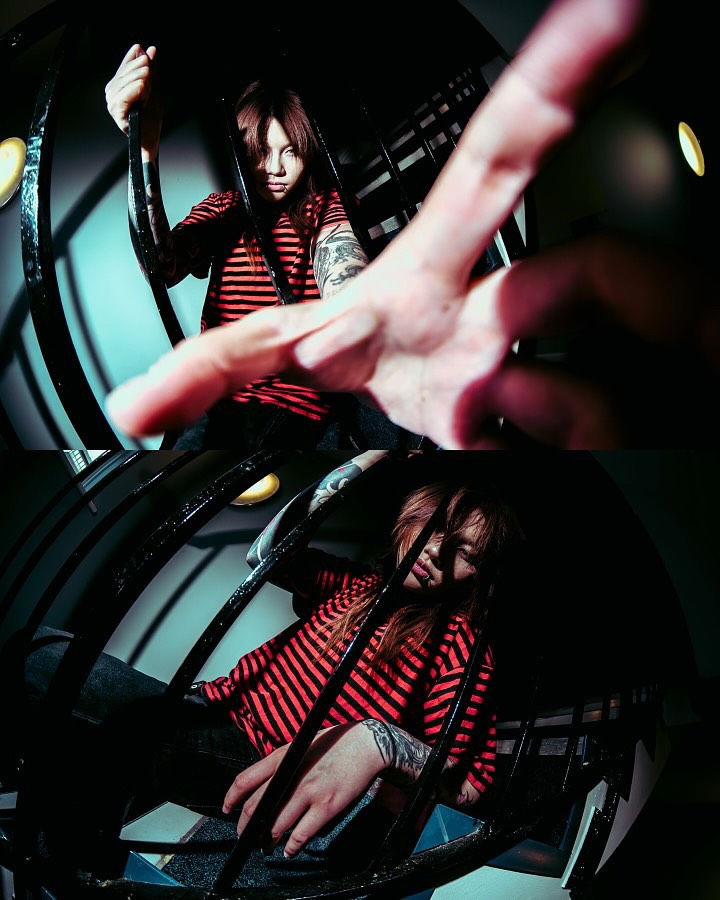
As the time progressed toward the latter parts of the night, the back-to-back between DJ FLO and DJ GONWOO brought one last change in structure. The tracks grew in their phrase lengths and became slightly softer in their rhythm and transition while never completely turning off the floor. The dancers found themselves occupying different space now, as they spread out further but kept on facing inward, unwilling to leave the shared space that the night had created. They kept their drinks longer than usually, they resumed conversing in fragments, yet the music remained the reference point for all their actions.
It turns out, looking back, that this installment of Streets of Seoul was about nothing specific, but rather about how each level of experience was rearranging itself into something new within the process of continuity. It was not about variety in the themes of the performance, such as Korean hip-hop, international rap, and French hip-hop, but about one common system of operation that was constantly being rewritten by the night. Even the venue, Chez Lulu, turned out not to be just a backdrop, but a responsive container for all those changes.
Outside, the reentry to Paris at dawn was not an act of returning to normal, but rather a slow process of detachment from another temporality. Street conversations had residual tempo, people talking louder than they needed to, like their speech had been calibrated to a different system that did not exist anymore in its precise form. The end point of the night was never clearly marked; rather, it was gradually getting thinner until the city took charge again in its entirety. Seoul’s streets #3 did not reveal themselves as a clubbing experience that peaked and came to an end, but rather as a temporary arrangement of how a space, a crowd, and a set of sounds can come into agreement about their direction for long enough to feel like permanence.


Comments