


Rock in Rio brings K-Pop to the main stage for the first time

The global music industry experienced yet another upheaval when, on September 11, 2026, the famous Palco Mundo stage at Rock in Rio, in celebration of the festival’s forty-one years, welcomed the first ever South Korean Pop Day in its entire existence. Having been known for being the stage where some of the biggest names in rock have performed since 1985, including the likes of Queen, Metallica, Guns N’ Roses, and Red Hot Chili Peppers, the contemporary pop music scene demonstrated its power and influence on the international music scene. With Stray Kids leading the lineup and bringing together an estimated audience of 100,000 festival attendees, the list included Japanese and South Korean group NEXZ, solo singer Hwasa, and Brazilian electronic dance music artist Alok. This particular event marked Stray Kids as the first South Korean artist to headline the world-famous Brazilian concert series.

The history of the event was reflected through a rapid sensory overload of Cidade do Rock. Even before the headliner took to the stage, the concert grounds had become a spectacular demonstration of a devoted fandom. Crowds of fans, predominantly teenage and young family ones, occupied the area around the main stage, which was decorated with official merchandise, photocards, customized clothes, and special light sticks. As a particular tribute to the genre's unique approach to concerts, the festival staff allowed fans to bring their light sticks inside the venue, which was an absolute novelty for the event since its establishment in 1985. A large number of early arrivals caused a physical crowding near the barrier. Long exposure to the Brazilian heat made some people faint, so festival security and firefighters were forced to take people out of the crowd before Hwasa's performance.
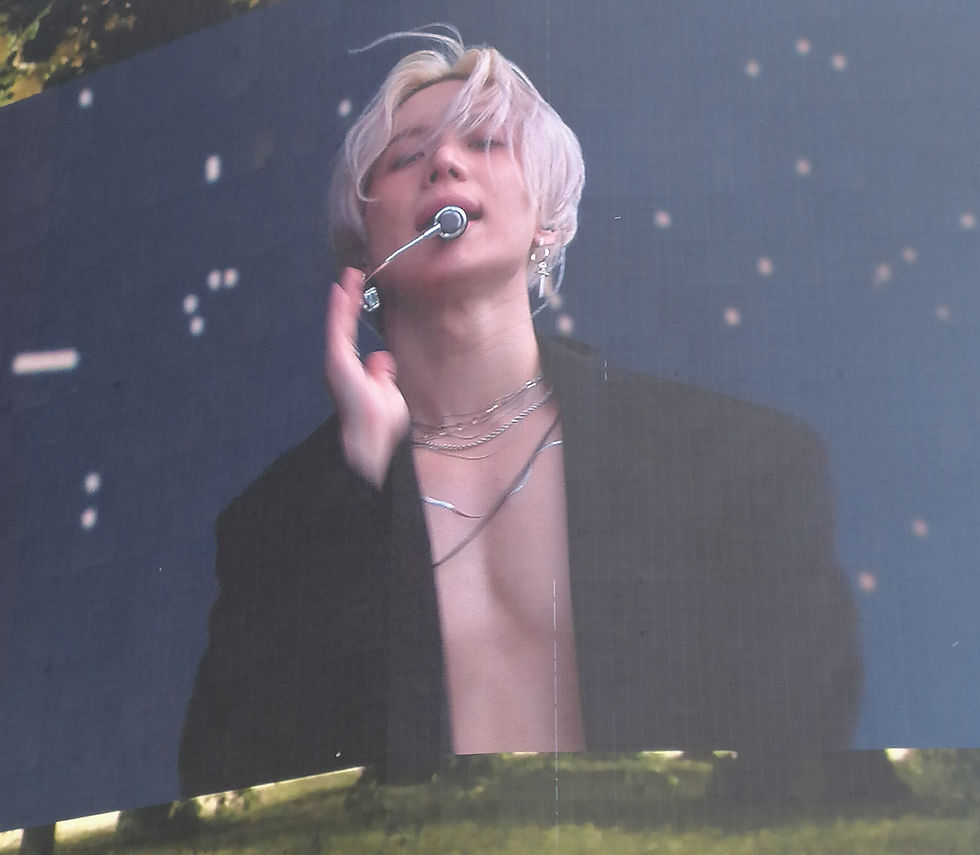
The moment Stray Kids finally came out for the last act of the evening, they had skipped all conventional routes from backstage and emerged in a very dramatic way. The eight members descended to the stage via the lower floor perimeter and their entry was caught on camera and played on the giant LED screens. Without any pre-choreographed moves and armed with their microphones in their hands, they created an immediate connection with the crowd of fans. Leader Bang Chan, taking in the entire space of the stadium, made audible remarks with the local slang about how he could not see the back end of the crowd of people. The show started with TOPLINE in no time at all.
Instead of mimicking the normal tour performance set-up, Stray Kids redesigned their set specifically to cater to the outdoor festival atmosphere. For the duration of the exciting ninety minutes, the group opted to abandon the continuous choreography of dance moves seen during their solo performances and focused on filling the expansive stage podium and connecting directly with the immense crowd of fans. Adding onto this unique setup, the presence of a strong live band brought new dimension to the sound experience, with heavy rock music arrangements and hip hop basslines being an integral part of the performance, taking the performance way outside the box of pop music conventions, despite using some pre-recorded backing tracks for certain vocal parts.

Cultural synthesis was seen as one of the most distinct artistic aspects of the show. In the performance of the DIVINE piece, the show took a turn towards imagery that was traditionally associated with Korea, including members dressed in hanbok style clothes, dancers with traditional Korean gat hats, and visual backgrounds depicting irworobongdo, which is an ancient painting depicting Korea royal power. The group showed respect to the hosting country through their musical and dance performances. Chk Chk Boom was performed using samba style moves amid the background of fireworks and light installations. In further continuation of this cultural dialogue, Bang Chan reminded the fans of the times that they spent together when visiting Brazil through the performance of a vocal part from the song Ai Se Eu Te Pego by Michel Telo. During the entire show, members used Portuguese words in their speech, and Bang Chan also made sure to remind fans to take care of themselves in such crowded spaces.
The digital footprint that resulted from the programming turned out to be truly amazing, providing tangible measures of the audience involvement. According to Brazilian telecom giant TIM, the special day of K-pop was marked by the impressive figure of 90.5 terabytes of mobile data traffic, amounting to about one-third of the total data consumed in the past four days at the event. Even an hour before the gates were opened, the mobile traffic was 35 percent higher than the opening day of the festival. In one hour during the midnight show of Stray Kids, the mobile traffic reached the level of 2.3 terabytes, breaking the previous single artist record of the event, established by the Black Eyed Peas, by some 20 percent, due to the live broadcasts to Instagram and WhatsApp. The official footage of the event became available in leading national media such as Globo and through concert films on streaming sites.

This particular progression of the event reflected the diverse nature of the modern South Korean pop music, breaking the stereotype about the genre. The opening acts NEXZ, which is a multinational project signed to both JYP Entertainment and Sony Music Japan, set up the tone for Palco Mundo with an intense and coordinated choreography. Right after them, solo performer Hwasa took the stage with an impressive hour long thirteen songs performance in front of 80,000 audience members. She provided an evident artistic difference by emphasizing such traits as powerful vocals, true personality, and live band performance with such singles as Twit, Maria, Good Goodbye, and I Love My Body as well as a MAMAMOO medley. By speaking Portuguese with warmth and getting emotional at the end of the performance while holding the Brazilian flag, Hwasa became the first female South Korean solo artist ever to perform on the main stage.
However, although ticket sales for the day did not officially achieve an outright sellout status and the enormous crowds were firmly clustered around Palco Mundo instead of being evenly spread throughout other stages, the overall effect of the day was unmistakable. The event acted as a gateway to culture, bringing a new audience into the festival format and proving that South Korean pop artists are perfectly comfortable playing in the most prestigious category of an international festival. The overwhelming success of the project has had a direct reflection in the festival’s management.
As soon as the 2026 version of the festival ended, the vice president of Rock World, Roberta Medina, has openly congratulated on the amazing success of the lineup and confirmed that K-pop will be present at the stage of Rock in Rio in 2028. Thanks to the combination of live rock music, tradition, tribute to the local culture, and groundbreaking use of technology, Stray Kids and their peers did not only perform at the venue but set the new standards of festivals programming worldwide.


Comments